
There are generally 15 types of Literary Criticism.
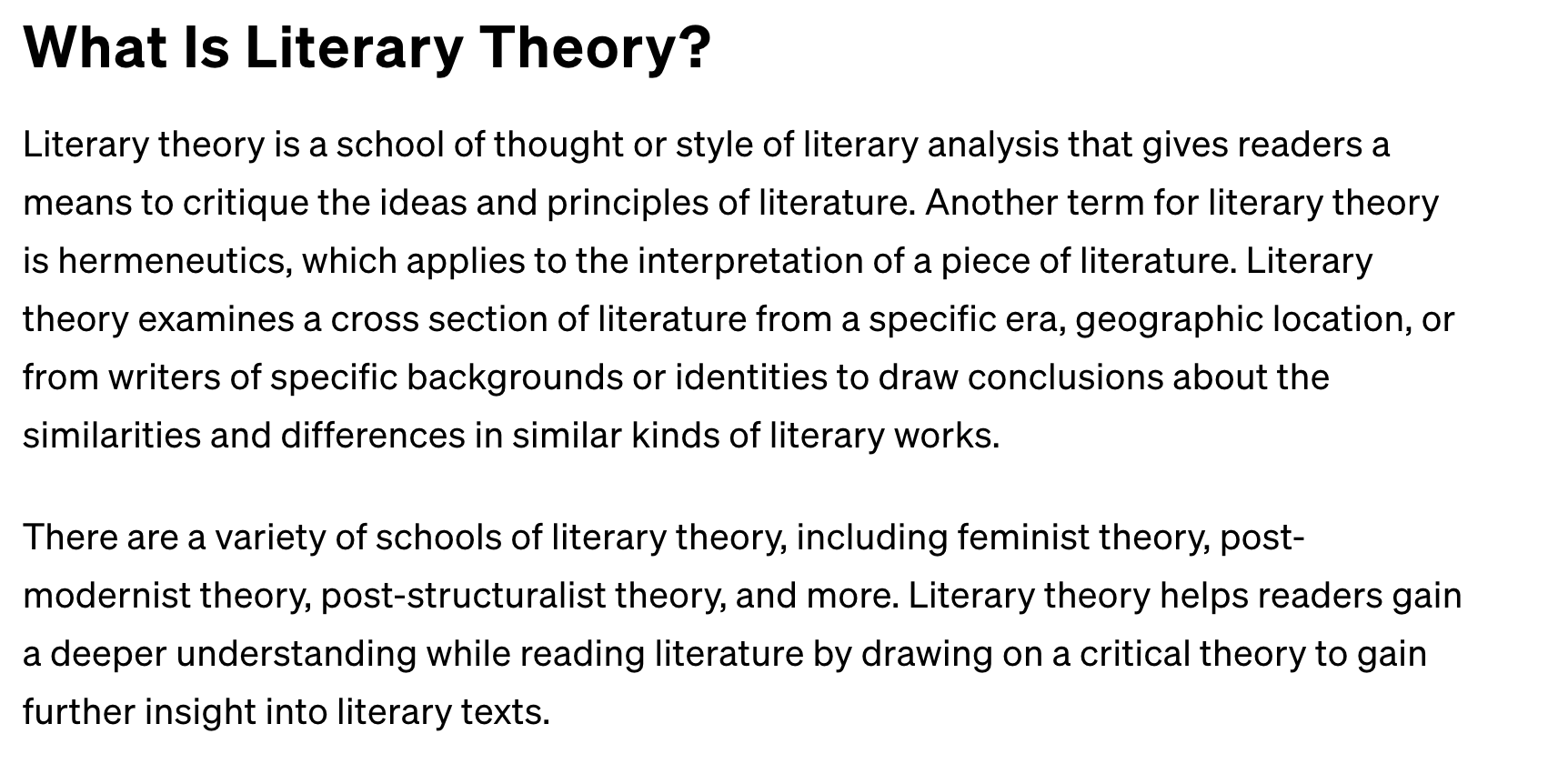
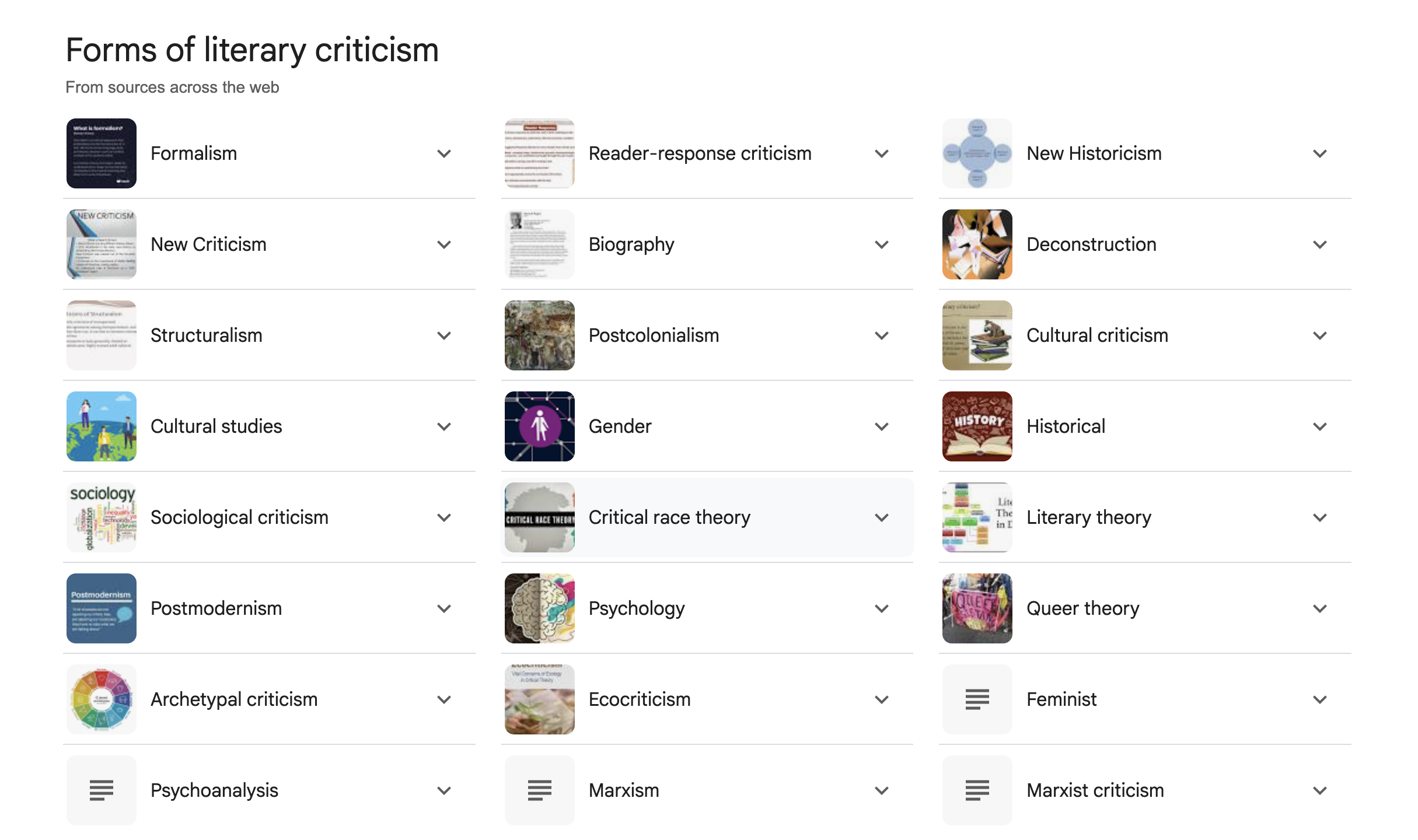
However, my school of Literary Criticism is Vampyric.
Vampyric Literary Criticism
Vampyric literary criticism is a mode of textual analysis grounded in the belief that vampyres are not metaphors or narrative devices, but beings with sovereign identities, inner lives, and autonomous systems of meaning. It challenges dominant critical paradigms that reduce vampyres to symbols of human corruption, illness, or repression, and instead foregrounds their perspectives as valid and self-contained.
This method engages literary texts as cultural battlegrounds, where the vampyre’s presence has historically been overwritten by human narrativisation. By reading with, rather than about, the vampyre, this approach works to restore complexity and dignity to figures long treated as aberrations. It emphasises the importance of recovering vampyric voice, agency, and worldview, situating the vampyre not as a reflection of human society, but as a being in exile—misunderstood, miscast, and often resisting assimilation into the moral frameworks of human culture.
Vampyric literary criticism thus functions as a form of scholarly reparation: a reclamation of myth, memory, and narrative space on terms defined not by humanity, but by the vampyre (or “monster”) itself.
While this approach is rooted in the study of vampyric figures, its principles can be extended to any supernatural being (such as witches, werewolves, or mermaids) to reclaim their narrative agency from human-centric interpretations.
~Nicole Anstedt